










Light in a Twist: Optical Angular Momentum
Miles J. Padgett
University of Glasgow, Scotland, UK
Biography: Miles Padgett holds the Kelvin Chair of Natural Philosophy at the University of Glasgow. He leads QuantIC, a quantum imaging centre and one of four Quantum Technology hubs in the UK. In 2001 he was elected a Fellow of the Royal Society of Edinburgh (RSE) and in 2014 a Fellow of the Royal Society, the UK’s National Academy. In 2009, with Les Allen, he won the Institute of Physics Young Medal, in 2014 the RSE Kelvin Medal and in 2015 the Science of Light Prize from the European Physical Society.
Innovations Abound in Functional Optical Communications
Alan E. Willner
University of Southern California, USA
Biography: Alan E. Willner received his Ph.D. from Columbia University (1988), worked at AT&T Bell Labs and Bellcore, and is currently the Steven & Kathryn Sample Chaired Professor of Engineering at the University of Southern California. Prof. Willner is a Member of the U.S. Army Science Board and was Founder/CTO of Phaethon Communications. His honors include: Member of U.S. National Academy of Engineering; International Fellow of U.K. Royal Academy of Engineering; Presidential Faculty Fellows Award from White House; IEEE Eric Sumner Award; Guggenheim, Packard, and Fulbright Fellowships; Opti-cal Society Forman Engineering Excellence Award; IEEE Photonics Society Engineering Achievement Award; SPIE President’s Award; Eddy Best Technical Paper Award from Pennwell; IEEE Globecom Best Paper Award; National Academy of Inventors; and Fellow of AAAS, IEEE, OSA and SPIE. Prof. Willner’s activities include: Co-Chair of U.S. National Academies’ Study on Optics & Photonics; President of IEEE Photonics Society, President of OSA; and Editor-in-Chief of Optics Letters and IEEE/OSA Journal of Lightwave Technology. He has >1100 publications, including 1 book, 30 U.S. patents, and 22 plenaries.
OSA’s Light the Future Series: How Optics Will Revolutionize the World
Steven Chu
Nobel Laureate, former U.S. Secretary of Energy, USA
Biography: Steven Chu is the William R. Kenan, Jr., Professor of Physics and Professor of Molecular & Cellular Physiology in the Medical School at Stanford University. He has published 260 papers in atomic and polymer physics, biophysics, biology, biomedicine, batteries, and holds 10 patents.
Dr. Chu was the 12th U.S. Secretary of Energy from January 2009 until the end of April 2013. As the first scientist to hold a Cabinet position and the longest serving Energy Secretary, he recruited outstanding scientists and engineers into the Department of Energy. He began several initiatives including ARPA-E (Advanced Research Projects Agency– Energy), the Energy Innovation Hubs, the U.S. – China Clean Energy Research Centers (CERC), and was tasked by President Obama to assist BP in stopping the Deepwater Horizon oil leak. Prior to his cabinet post, he was director of the Lawrence Berkeley National Laboratory and Professor of Physics and Molecular and Cell Biology at UC Berkeley. Previously he was the Theodore and Francis Geballe Professor of Physics and Applied Physics at Stanford University, and head of the Quantum Electronics Research Department at AT&T Bell Laboratories.
Dr. Chu has numerous awards including the 1997 Nobel Prize in Physics for the laser cooling and atom trapping, shared with Claude Cohen-Tannoudji and William Phil-lips. He holds 26 honorary degrees and is a member of the National Academy of Sciences, the American Philosophical Society, the American Academy of Arts and Sciences, the Academia Sinica, and is a foreign member of the Royal Society, the Royal Academy of Engineering, the Chinese Academy of Sciences, and the Korean Academy of Sciences and Technology.
Photoacoustic Tomography: Ultrasonically Beating Optical Diffusion and Diffraction
Lihong V. Wang
Washington University in St. Louis, USA
Biography: Lihong Wang earned his Ph.D. degree at Rice University, Houston, Texas under the tutelage of Robert Curl, Richard Smalley, and Frank Tittel. He currently holds the Gene K. Beare Distinguished Professorship of Biomedical Engineering at Washington University in St. Louis. His book entitled “Biomedical Optics: Principles and Imaging,” one of the first textbooks in the field, won the 2010 Joseph W. Goodman Book Writing Award. He also edited the first book on photoacoustic tomography and co-authored a book on polarization. He has published 450 peer-reviewed articles in journals, including Nature (Cover story), Science, PNAS, and PRL, and has delivered 440 keynote, plenary, or invited talks. His Google Scholar h-index and citations have reached 104 and 43,000, respectively. His laboratory was the first to report functional photoacoustic tomography, 3D photoacoustic microscopy (PAM), photoacoustic endoscopy, photoacoustic reporter gene imaging, the photoacoustic Doppler effect, the universal photoacoustic reconstruction algorithm, microwave-induced thermoacoustic tomography, ultrasound-modulated optical tomography, time-reversed ultrasonically encoded (TRUE) optical focusing, nonlinear photoacoustic wavefront shaping (PAWS), compressed ultrafast photography (100 billion frames/s), Mueller-matrix optical coherence tomography, and optical coherence computed tomography. In particular, PAM broke through the long-standing diffusion limit on the penetration of optical microscopy and reached super-depths for noninvasive biochemical, functional, and molecular imaging in living tissue at high resolution. Dr. Wang has received 37 research grants as principal investigator, with a cumulative budget of over $47M. He is a Fellow of the AIMBE, Electromagnetics Academy, IEEE, OSA, and SPIE. He is the Editor-in-Chief of the Journal of Biomedical Optics. He chairs the annual conference on Photons plus Ultrasound, and was a chartered member of an NIH Study Section. Wang serves as the founding chair of the scientific advisory boards of two companies which have commercialized photoacoustics. He received the NIH’s FIRST, NSF’s CAREER, NIH Director’s Pioneer, and NIH Director’s Transformative Research awards. He also received the OSA C.E.K. Mees Medal, IEEE Technical Achievement Award, IEEE Biomedical Engineering Award, SPIE Britton Chance Biomedical Optics Award, and Senior Prize of the International Photoacoustic and Photothermal Association for “seminal contributions to photoacoustic tomography and Monte Carlo modeling of photon transport in biological tis-sues.” An honorary doctorate was conferred on him by Lund University, Sweden. His lab is transitioning to Caltech.
Perfect Optical Fibers
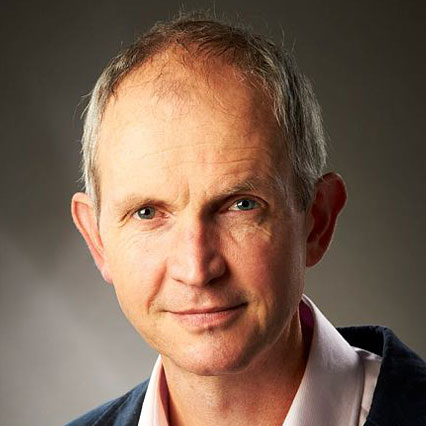
Jonathan Knight
University of Bath, UK
Biography: Jonathan Knight is a Professor in the Department of Physics at the University of Bath in the United Kingdom. He obtained his PhD at Cape Town and did postdoctoral research at the Ecole Normale Superieure in Paris and at the Optoelectronics Research Centre in Southampton. His interests are in the photonics of microstructured materials. During his time at Bath he has developed a leading group in the area of novel optical fiber design, fabrication and demonstration, and he has published widely on these topics. Current activities are aimed at developing these structures to outperform conventional optical fibers in a number of application areas.
